Three Lyric-Writing Exercises for a Blank Page
DedicatieMuzicala ·
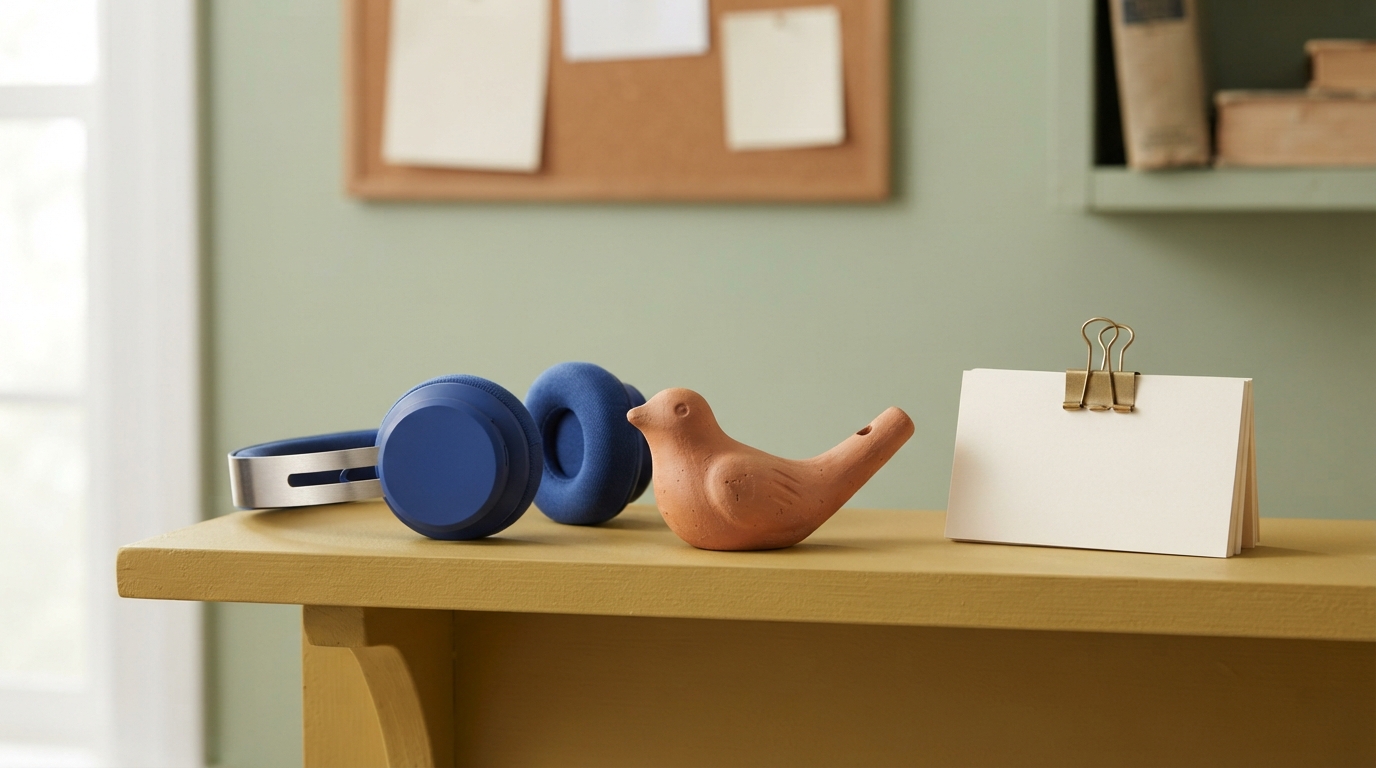
When the lyric page is blank, try one small writing constraint instead of waiting for the perfect subject. These three independent lyric-writing exercises give you starter material and worked lines; choose one direction you want to keep, and leave the rest.
Start small, and choose just one exercise
You don’t need a theme, a rhyme scheme, or a finished-song plan before you begin. Treat each prompt as a way to make raw material, not a timed cure for writer’s block or a promise that inspiration will arrive. Try one exercise, or return to another on a different day.
1. Put two unrelated things together
Word bank: coffee mug, house key, paper receipt; in a crowded elevator, under a porch light, during a thunderstorm. Pick one object and one unexpected place or situation. Don’t explain the pairing yet—write a line that lets the image feel strange, tender, funny, or tense.
Selected pair: coffee mug + crowded elevator. Two possible openings: “Your coffee mug shook each time the elevator sighed.” Or: “I held my coffee like a small, warm secret.” The first leans toward a vivid scene; the second turns the same pairing inward. Keep whichever invites you to write another line.
2. Turn an absolute into an honest complication
Start with this invented absolute: “I always know the answer.” Rather than simply changing “always” to “never,” make room for a more complicated truth. Try: “I don’t have every answer, but I can stay beside you.” Or: “Today I’m asking the question I kept hiding.”
Either line can stand on its own as a first-person opening. You might continue with a specific moment that shows what staying or asking looks like. The exercise is a fresh writing prompt, not a prescription for revising someone else’s song.
3. Let a question open the door
Choose a question that suggests a scene or a feeling. Try: “What did you leave lit in the kitchen?” “When did the long drive start to feel shorter?” “Which part of the truth can I say out loud?” Answer your chosen question in a line that gives a detail, a response, or a new uncertainty.
Worked couplet: “What did you leave lit in the kitchen? / The little lamp that makes the late hours feel less wide.” The answer doesn’t have to solve the question completely; it can reveal the speaker’s mood or point toward a moment worth exploring.
Keep one line and a next direction
Save this line: “A crooked note comes tumbling out.” Next-direction note: “Let the speaker describe what makes the second attempt feel different.” This is a reminder for your future self, not a score of the line’s quality. You don’t have to use all three exercises or combine every line into one song.
If you want to develop a draft with DedicatieMuzicala, you can review and edit original lyrics before generating music. That editing applies to the draft before music generation; it doesn’t change words in an already recorded track.
Fictional example
Fictional example: a first imperfect note
In a small craft and music room, adult friends Maya and Jordan sit near a soft sage-green wall and a yellow shelf. Maya turns an unlettered terracotta bird whistle in her hands, unsure how to make it sound. Jordan waits without rushing her. The first note comes out thin and wobbly. They both laugh—not at Maya, but at the surprise of it—and she tries again. This time the note is still imperfect, but she stays with it long enough to hear its shape. Maya opens a blank notebook and writes about beginnings that don’t need to be beautiful to count.
The yellow shelf leans into the light A clay bird warms against my thumb I lift it like I know the tune A crooked note comes tumbling out You grin, and I can grin at it The room keeps all its windows still I try again, a softer breath The second sound is mine as well No perfect signal, no grand sign Just one small note, and then a line
Listen to the example
Fictional example: a first imperfect note · English
Fictional example
The yellow shelf leans into the light A clay bird warms against my thumb I lift it like I know the tune A crooked note comes tumbling out You grin, and I can grin at it The room keeps all its windows still I try again, a softer breath The second sound is mine as well No perfect signal, no grand sign Just one small note, and then a line
Frequently asked questions
Do I need a theme or rhyme before trying an exercise?
No. These prompts help you make raw starting material. Rhyme is optional, and you can find a theme in the lines afterward.
Do I have to use all three exercises or keep every line?
No. Choose one line or direction you want to continue. The exercises are alternatives, not steps you must combine.
Can I change the lyric after the recording exists?
You can review and edit the lyric draft before generating music. The draft editor does not change words in an already recorded track.