How to Translate Your Own Song Without Losing Its Meaning
DedicatieMuzicala ·
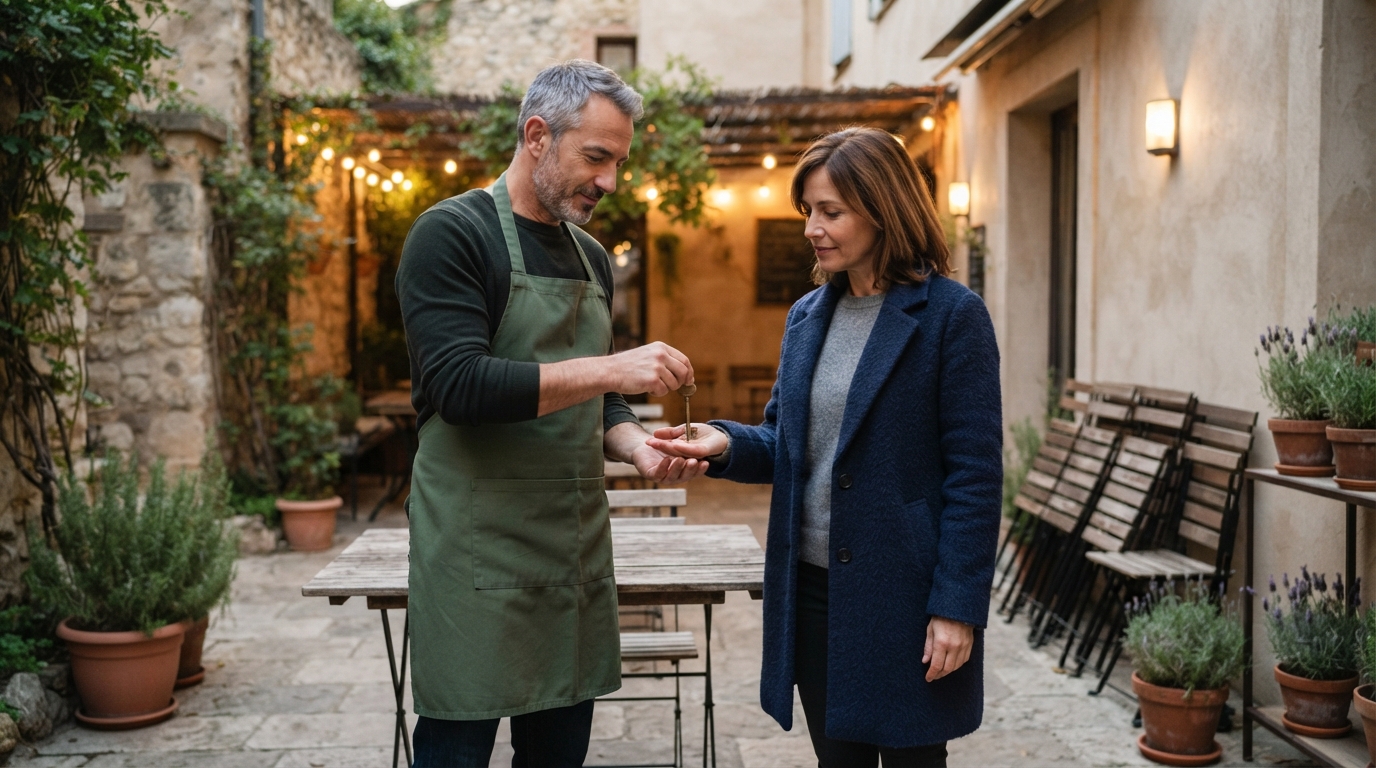
To translate your own song without losing its personal meaning, first mark which facts and message must stay true, then let idioms, word order, and rhyme change. A natural adaptation is not a word-for-word copy, and a new-language version may sound different from the original.
Start with the story that must remain true
Use this fictional case as a meaning-first translation brief. Bea returns after one week away from her small courtyard cafe. Her adult friend Noah opened the terrace, watered the potted herbs, and hands her a plain brass key when she comes back. The emotional point is gratitude for steady, practical help—not a rescue, romance, debt, or claim of ownership.
Filled meaning card: Facts to preserve — Bea and Noah are friends; Bea was away for one week; the setting is her small cafe; Noah opened the terrace, watered the pots, and returned the brass key. Message — Bea appreciates reliable help and the familiar place Noah kept running. Flexible — line order, idioms, rhyme, and images that are not factual anchors. Avoid — a castle or military event, a promise to repay money, romantic language, or a claim that Noah owns the cafe. Keep names consistent; localize a name only if the people involved want that.
Separate an idiom from the fact it is trying to express
An idiom can carry a feeling without describing a literal event. If Bea writes “You held the fort,” the intended meaning is “You kept the cafe running while I was away,” not that Noah defended a castle. A natural adapted lyric might say, “You kept our little cafe going.” Keep the confirmed action; replace the image if a direct equivalent would sound strange or suggest the wrong story.
Likewise, “I owe you one” is a casual thank-you here, not a financial debt or a promise to grant any future favor. The plain meaning is “I’m grateful you were there.” A natural lyric alternative is “I’m grateful you stayed close by.” If the target language has an idiom with the same everyday meaning, a fluent writer can use it; if not, plain wording is safer than a forced literal translation.
Use a complete translation request
Copy this blank request and fill it in: “Make a natural [target language] version of my own original song. Preserve these confirmed facts: [names, relationship, actions, setting, and timing]. The message should be [emotional intention]. These phrases mean [idiom] = [plain meaning] and [idiom] = [plain meaning]; do not translate them literally if that changes the story. Keep names consistent. Rhyme, line order, and wording may change when needed for natural language. Do not invent [details to avoid]. Do not promise the original melody, voice, phrasing, duration, or pronunciation will stay the same.”
Filled request for Bea’s song: “Make a natural Spanish-language version of my original song for Noah. Preserve that Bea was away for one week, Noah opened the cafe terrace, watered the pots, and returned the plain brass key. The message is warm gratitude for reliable help between friends, not romance, rescue, debt, or ownership. ‘Held the fort’ means kept the cafe running; ‘I owe you one’ means I’m grateful for your help. Use natural Spanish wording rather than forcing literal images or rhyme. Keep Bea and Noah’s names consistent, and do not add events. The new performance may differ from the original.”
A complete original lyric to adapt
Here is a fictional ten-line source lyric for the brief above. It includes two colloquial phrases so you can practice deciding what they mean before adapting them. The translated wording need not match each line or rhyme; it should still let a listener recognize the confirmed cafe story and Bea’s gratitude.
Request and review a new-language version
For an eligible completed song you own and can edit, open Edit, check access and the current quote or conditions, then enable Language and choose the target language. If you want the system to adapt the existing meaning, leave Lyrics off and clearly request a natural translation. If you provide replacement Lyrics, supply the complete reviewed target-language lyric—not just a changed line. Leave Style off unless you intend a separate style change. The app’s display language does not have to be the song’s target language.
Review the translated text with a competent reader of that language against your meaning card: check names, who did what, the one-week timeline, and any negation or relationship wording. Ask whether the lines sound natural when read aloud; reject wording that preserves a rhyme by inventing a castle, debt, romance, or other fact. Then listen to the complete new audio. Check that the audible story still feels right and that names are understandable in performance. Displayed lyrics alone cannot prove how a name is sung. Voice, melody, phrasing, duration, and pronunciation may differ, so accept the version for its meaning only if the complete text and performance work for your purpose.
The cafe story and lyrics are fictional. The Romanian, English, and French listening examples are independent original illustrations of the story, not an actual edit, a translated source recording, or a controlled comparison of languages or performances. The text-free cover is a conceptual scene, not proof of a finished translation.
Fictional example
Fictional example: The Key at Closing
Bea, a fictional cafe owner, returns after a week away to her small courtyard cafe. Her adult friend Noah has opened the terrace each day and watered the potted herbs while she was gone. At closing, he places the plain brass key back in her hand. Bea wants to thank him for dependable help and for keeping the familiar place running. She writes that he “held the fort” and adds “I owe you one,” but neither phrase is meant literally: there was no castle, emergency, money loan, or promise of unlimited favors. She wants a Spanish-language adaptation for Noah that keeps the facts and warmth while allowing natural phrasing and different rhymes.
One week away from the cafe door You opened the terrace each morning You watered the pots in the courtyard And kept our little place going You held the fort while I was gone The chairs came in at closing time You placed the plain brass key in my hand The herbs were green beside the door I owe you one, my friend, I say I’m grateful you were there each day
Listen to the example
Fictional example: The Key at Closing · English
Fictional example
One week away from the cafe door You opened the terrace each morning You watered the pots in the courtyard And kept our little place going You held the fort while I was gone The chairs came in at closing time You placed the plain brass key in my hand The herbs were green beside the door I owe you one, my friend, I say I’m grateful you were there each day
Frequently asked questions
Should I translate every lyric line literally?
No. Preserve confirmed facts and the intended message, but change idioms, word order, and rhyme when a literal version sounds unnatural or changes the story.
Should I enter a complete translated lyric or ask for an adaptation?
If you have a complete target-language lyric reviewed for meaning and natural wording, provide the whole lyric. Otherwise, leave the optional Lyrics field off and request a natural adaptation of the existing meaning.
Will the new-language version sound exactly like my original?
That is not guaranteed. A new version may differ in voice, melody, phrasing, duration, or pronunciation, so review the complete audio as well as the displayed lyrics.